|
|||||||
 |
|||||||
| Comment from:
|
|||||||
|
|||||||
 |
 |
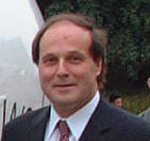
Jack
Dusseldorp - President of the IVTO - and enthusiastic supporter of Mechatronics "The WorldSkills Mechatronics
Competition was the result of a collaborative pioneering effort between Australian and
Dutch enthusiasts with the support of Festo back in 1991. It is now the biggest and most
technologically advanced team event in WorldSkills; with 20 participating member countries
competing for world honours at the Seoul event in September 2001.
With the introduction of a new team-based competition (Manufacturing Team Challenge - MTC) in Seoul, WorldSkills has expanded the Mechatronics competition concept to enable teams of up to 4 skilled young technicians to design and manufacture cost effective solutions to real life problems in both industry and society. What excites me about both the Mechatronics and MTC competitions is that they reveal the inherent courage and creativity of very skilled young people who are able to solve problems that make a real difference in everyday life. They are the real champions when it comes to scoring economic goals for their countries." |
|||||
 |
 |
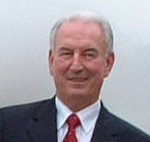
Franz Schropp - Vice President,
Chairman of the WorldSkills Technical CommitteeMechatronics
technicians are tradespeople who master a blend of technical and communication skills, and
process-oriented professional competence. This was effectively demonstrated at the 36th
WorldSkills Competition, where teams from 20 countries took part in the Mechatronics
competition.
Over 100,000 visitors witnessed the flexibility, creativity and profound knowledge of these young people and many were able to capture these in video and photos. Competitions of this type promote international understanding, create many professional and personal friendships and demonstrate the high level of expertise of the younger generation. Preparations for the next WorldSkills Competition St. Gallen, Switzerland are in full swing. |
|||||
|
|
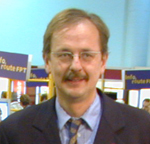
Dr Theodor Niehaus - Managing Director Festo Didactic At Festo Didactic we are so convinced of the value of the WorldSkills Competition that we not only partnered up with WorldSkills to become their first ever Event Sponsor, we also planned to have a global meeting of our 52 companies in Seoul, starting as the competition finished. Due to the horrific events on the 11 September, that meeting was cancelled at short notice –most of us did not get to see the competition in person. | |||||
|
|
But we did manage to keep track of events as they happened thanks to this
Mechatronics website. It was created and maintained by our Product Management for Training
and Consulting and enabled countless people worldwide to keep in touch with the event
– showing the power of the Internet by bringing them a webcam of the arena and
up-to-date results and images. (Click
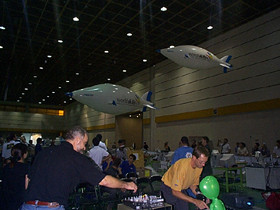
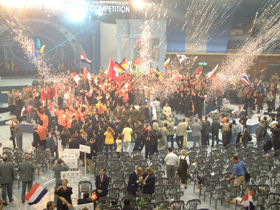
here for site statistics) In Germany every new morning of the competition saw people in the office logging on hurriedly to catch up with the events of the day - 7 hours ahead in Seoul. Which of the 20 teams of two - the winners of earlier national competitions – was now in the lead as they competed feverishly for four days to win the coveted Gold medal? As in past competitions, while it was interesting to see how the competitors must command all technical aspects to survive at this world-class level - it was astounding to see the level of teams skills they demonstrated in order to master the complex tasks demanded of them under pressure. It demonstrated to professional visitors that MPS, the platform for the competition, goes far beyond technical training - it is a highly versatile platform for the instruction and training of personal and team skills. The introduction of a free design component and the evaluation of productivity criteria brought the competition even closer to the demands of Manufacturing Excellence. On Day 4, in what has now become tradition in the relaxed atmosphere after the final section had been completed, we saw silent images of a magnificent finale: As Strauss's "Thus Spake Zarathustra" thundered to a climax, Festo´s two airfish glided gracefully into the Mechatronics arena and dipped and soared over the delighted competitors. Then the Mechatronics choir sang the newly texted Anthem to the tune of Frère Jacques in three-part canon. There was that famous Mechatronics Team again – over 60 people, aged between 18 and 60 from across the globe. I would like to express my thanks to all of that team - and those working in the background allowing us to share the excitement via the web – for their contribution to another successful competition. And congratulations to all competitors on their excellent performance. Sorry you missed it? Your next chance is in St. Gallen in 2003! See you there... |
||||||
 |
 |
Martin
Williams - Chief Expert for Seoul 2001 and WorldSkills Liaison & Marketing for St
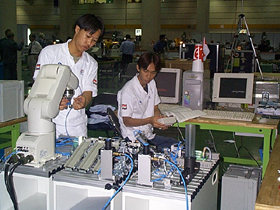
Gallen 2003 The Mechatronics competition brings together young people and experts from over 20 countries and throws them into an arena where everyone's skills are put to the test for 4 days. You can see world-class Mechatronics teamwork in this competition – over 80 people working together in one huge team. |
|||||
| This
demonstrates not only how rewarding Manufacturing Excellence training is – but also
how much fun it can be. What criteria are used? In the past the competition used only time and machine performance as criteria. In Seoul we took out the assembly of "known" stations (ones the competitors know) against the clock. We also experimented with free design of solutions to a problem. We have now formally written free design into the trade description for the competition in St. Gallen 2003. This will enable us to develop towards using productivity as the main criteria for the competition in future. |
|||||||
|
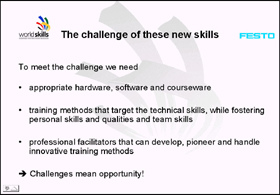
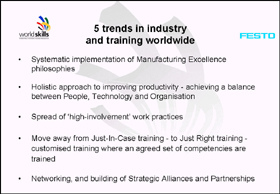
Five trends in training All this completely in line with five general trends in industrial training that can be identified: The first trend is the systematic implementation of Manufacturing Excellence philosophies such Total Productive Maintenance, Just-in-Time, Lean Management or the Toyota Production System. Implementing these strategies has demanded a radical change in thinking on the shopfloor resulting in the spread of ‘high-involvement’ and team-oriented work practices where
The second trend is the the huge requirement for new forms of training that cater for the considerable change in attitude throughout a company in order to meet these demands. A third trend is that training has become much more focussed – the pressure of global competition demand that companies train "everything that is necessary and only what is necessary". The fourth trend is that training is changing from the purely technical training of the 80´s and 90´s to training that addresses the development of the personal qualities and skills essential to effective teamwork. The Mechatronics competition demonstrates several ways of doing this. The final trend is the development of global networking – to which the two yearly WorldSkills competition contributes significantly. Better still - recognising this trend, the WorldSkills Organisation has now instituted the WorldSkills Leaders Forum to take place parallel to the competition every two years - with the express aim of developing networking and providing a forum for people to share best practices and innovations. |
||||||
 |
The analysis by competitors during and after the
competition tells us what they liked – and we still have to improve. Despite the ups
and downs they all experience , one positive message always comes out – they
thoroughly enjoy the team spirit and atmosphere in the Mechatronics arena. That's one of the many reasons why everyone that takes part in the WorldSkills competition – regardless of their role - knows that "If you take part, you always win!" |
||||||
 |
 |
Benoit
Maisonneuve - Chief Expert for St Gallen 2003 Mechatronics is a young trade in World Skill. It has evolved rapidly thanks to imagination and implication of dedicated people, especially Martin Williams, former Chief Expert. Many aspects introduced in this trade make for it’s winning recipe: fast pace, high tech, "real-time" marking. Computers, machines in motion and robots produce a crowd pulling attraction. In past competitions, I saw the best of the youth, working in teams, highly skilled facing the toughest task. This still amazes me to see them so well prepared, so knowledgeable, working with so much stress and performing so well. It is a real thrill. Yet Mechatronics still has lots of future ahead. I am very excited at the idea of preparing the next World Skills Mechatronics competition. The team of experts and the support of the sponsor Festo, make a great environment for creating new challenges for competitors. |
|||||
|
|
Andy
Heath - Deputy Chief Expert for Seoul 2001 and St Gallen 2003 To start with, I wish to diverge from the topic of Mechatronics and the International WorldSkills competition to mention and thank Martin Williams (Festo Didactic, Germany) for all of his hard work, commitment and passion for Mechatronics. This year, Martin has chosen to step down as Chief Expert (since 1997, of whom I worked with this year as Deputy Chief Expert) and move on to other aspects of the competition. In his wake, he has left some huge shoes to fill, of which I pass on my full support to the new Chief Expert, Benoit Maisonneuve (Canada). I shall work with Benoit also as Deputy Chief Expert in 2003. It is with some creativity on Martin's behalf along with Eckhard von Terzi (Festo Didactic) that we have seen some changes in Mechatronics over the last two competitions - changes that have pushed our competitors even more and challenged us to be more creative in our approach also. As for the competition, we have taken some huge leaps and bounds over the last few competitions and are still (I believe) one of, if not the most exciting category to watch at the International Competition. The aspect of working jointly with a fellow colleague at the job is a critical component of the work force as we see it today, considering during breakdown scenario's it is vital to have your equipment/machinery working again as soon as possible. Teamwork is one industrial practice we have incorporated into Mechatronics but we still have many other areas to cover. With an ever-changing expectation of industry on training and educational sectors throughout the world, I'm sure there will be many more challenges ahead to overcome and many more challenges to set for the competitors/candidates. The young talent we saw in Seoul, Korea was a credit to themselves and all of their trainers/facilitators and supporting organisations in their respective countries. I am excited when I contemplate what I am going to see of the new up and coming young work force from around the world in 2003 in St Gallen, Switzerland. The skills they develop during their training and then transfer back into their careers at home is astounding and I hope this continues to grow and we continue to be one of the largest categories within the competition. All this, as well as attracting the best our industries have to offer, by being a competition all industries want to be involved in and see as an investment in their future. In closing, I would like to thank all of the other experts, translators, the shop master, the web site co-ordinators, work shop assistants and Festo Didactic for their on going support, as without all of these people this category would not be as big a success as it is today nor would it continue to be in the future. I apologise to anyone that I have forgotten, though you all know who you are that help make Mechatronics great. Thank you! |
|||||
 |
|
Eckhard
von Terzi - Product Manager - Modular Production Systems for Festo Didactic "During the competition teams from 20 countries work with MPS - the Mechatronics training system from Festo Didactic. One hundred stations are assembled commissioned and programmed by the teams. By sponsoring the competition we are drawing on the experience of our 20 participating countries. We get a lot of new ideas – not only on technology but also on soft skills from the competitors and experts. This helps us to further improve our training system. The intensive sharing of experience with all Mechatronics experts worldwide is vital to producing products that really reflect the needs and requirements of vocational and technical education.
|
|||||